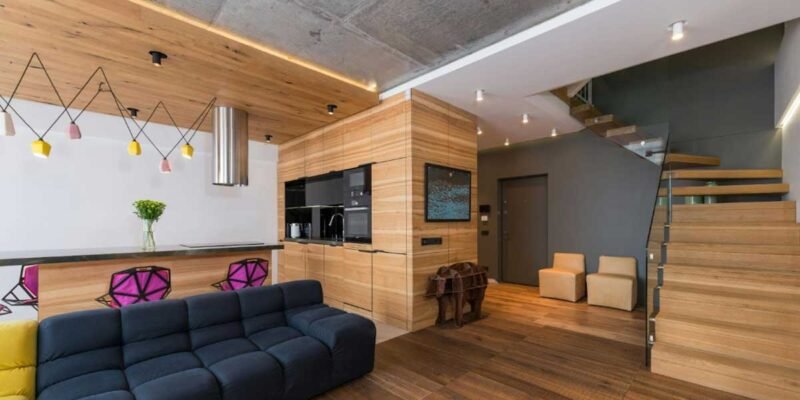
Cylind is often brought into renovation projects at the moment when enthusiasm meets uncertainty. Open-plan living has become one of the most requested architectural changes in modern homes, fueled by a desire to break away from the segmented, dark rooms of traditional design. Removing interior walls promises an abundance of natural light, a sense of limitless space, and easier social interaction between family members. However, once the idea moves beyond inspirational Pinterest boards and magazine spreads, daunting questions appear. How will the kitchen island affect the walkway to the living room? Will the dining table feel stranded in the middle of a vast hall?
Knocking down walls changes more than just the physical layout; it fundamentally alters how a home feels, sounds, and functions on a minute-to-minute basis. This is precisely why working with a professional 3D visualisation company matters. High-fidelity 3D renders allow families to rehearse the renovation in a digital environment before a single sledgehammer is swung. Instead of guessing how the new space will behave, homeowners can experience the true scale, proportion, and balance of their future home in advance. This visual clarity acts as an insurance policy against structural regret, ensuring that the open-plan design supports the rhythm of real life rather than fighting against it.
Navigating the Spatial Challenges of One Large Room
An open-plan interior removes physical boundaries, but the human need for psychological structure remains. In a successful home, the kitchen, dining, and living areas must coexist in harmony without interfering with one another’s specific purposes. Without walls to guide it, zoning relies entirely on furniture placement, lighting strategy, and subtle material changes. These complex relationships are notoriously difficult to convey in a flat, two-dimensional drawing, which lacks the depth and perspective of lived experience.
Through architectural visualization, homeowners can explore how these zones interact from multiple viewpoints, standing virtually in the center of the room to see the whole picture. 3D renders reveal issues early that would be catastrophic to fix later. They highlight walkways that feel uncomfortably tight or furniture that looks “lost” within a larger-than-expected volume. Conversely, they can expose oversized elements, such as a massive sectional sofa, that might block natural movement between spaces or dwarf the other zones. Seeing these spatial relationships in 3D allows for the fine-tuning of every square inch.
The Science of Circulation: Mapping Your Daily Movement
Flow is a term often used in design, but it describes a very real science: how people move through a space during their daily routines. In open-plan homes, flow is the primary determinant of comfort. If a resident has to take a convoluted path around a dining chair just to reach the refrigerator, the design has failed. A 3D architecture visualization model allows designers and homeowners to simulate these movement patterns with mathematical precision.
Digital walkthroughs show exactly how someone moves from the entrance to the kitchen with groceries, or from the sofa to the dining table during a party. Sightlines are tested with equal rigor. Can the person cooking at the stove easily speak to guests at the table? Can a parent watching television still keep an eye on children playing in the kitchen area? These tiny details shape the home’s psychological impact, determining whether the space feels like a connected sanctuary or a chaotic hall of noise and movement.
Strategic Visual Elements for Successful Open-Plan Zoning
Clear zoning in a large room does not require physical barriers; it requires visual intention. To achieve this, several design layers must be coordinated. Layered lighting is one of the most effective tools, using different fixtures to visually anchor each functional zone, such as a dramatic pendant over the dining table and recessed task lighting in the kitchen. Rugs and floor finishes are also used as digital anchors to define activity areas, acting as “islands” for furniture to sit upon.
Additionally, large furniture pieces can be positioned as soft spatial dividers—a sofa back, for instance, can act as a low wall between the living and dining areas. A consistent color language is used across all zones to unify the space, while ceiling features, such as bulkheads or coffers, can subtly indicate where one functional area ends and another begins. These elements work together in a 3D model to organize the space effectively without ever closing it off or sacrificing the feeling of openness.
Visualizing Natural Light and Acoustic Impact
Opening a floor plan fundamentally changes how light moves through a home. Windows that once served only a single room begin to influence the entire interior, sometimes creating unexpected glare or leaving areas in deep shadow. Using sun studies within architectural visualization, designers can test natural light at various times of day and across different seasons. This data helps in placing seating, computer screens, and work surfaces intelligently to maximize comfort.
Acoustics are an equally vital, yet often overlooked, component of open-plan living. Large, open spaces with hard surfaces tend to amplify sound, leading to echoes that can make a home feel cold or noisy. While renders are inherently visual, they are an excellent diagnostic tool for identifying where soft materials—such as heavy curtains, acoustic panels, or large upholstered pieces—should be introduced to control sound bounce. Seeing the room’s volume in 3D helps homeowners understand the scale of soft furnishings needed to keep the home peaceful.
The Emotional Impact of Visual Certainty
Major renovations are notoriously stressful and often represent one of the largest financial investments a family will make. Uncertainty regarding the outcome only magnifies that stress. Seeing a photorealistic, realistic preview of the finished home provides immense emotional relief. It allows family members to align around a shared vision, replacing abstract descriptions and conflicting imaginations with a single, undeniable image of the future.
This visual certainty turns the renovation from a stressful gamble into a controlled, creative process. When the homeowners can see that the chosen textures work and the layout is sound, the “leap of faith” is removed. They can move into the construction phase with excitement and confidence, knowing exactly what the end result will look like once the dust has settled.
Cost Avoidance Through Virtual Prototyping
Mistakes in open-plan renovations are exceptionally expensive to correct. Moving plumbing stacks, rerouting electrical systems, or shifting structural beams after they have been installed can quickly double a project’s budget. A professional 3D architecture studio uses renders to expose these risks during the planning phase. Furniture layouts may reveal that the intended kitchen island is too large for the space, or that the current storage plan is insufficient for the family’s needs.
This process reframes the entire philosophy of home improvement: visualize first, build once. By creating a virtual prototype, homeowners can iterate on their ideas until they are perfect. They can test different materials, move walls digitally, and swap furniture styles in seconds rather than days, ensuring that every penny spent during the physical construction goes toward a design that has already been proven to work.
Conclusion
Open-plan living succeeds only when openness is paired with a clear, underlying structure. Removing walls creates a vast opportunity for a more social, bright home, but it is the flow and zoning of the space that ultimately create comfort. By working with a 3D visualization service, homeowners gain absolute control over that delicate balance. Zones are defined with purpose, movement is refined for efficiency, and light and sound are managed with deliberate care. A truly successful open-plan home is not defined by the walls that were removed, but by the strength and beauty of the carefully designed connections that are built in their place.