This article delves into the enigmatic life of Pablo Huston, the adopted son of director John Huston and actress Evelyn Keyes. We will explore the extraordinary circumstances of his adoption, his place within the iconic Huston family, and the profound reasons behind his lifelong commitment to anonymity. This is not just a biography; it is an exploration of identity, family, and the courage to define success on one’s own terms.
For fans of the Huston legacy and anyone fascinated by the human stories behind Hollywood’s golden age, Pablo’s life offers a rare and compelling narrative. It challenges our assumptions about fame and reminds us that the most powerful legacies are not always the ones lived in the spotlight. His story is a quiet rebellion against the noise of celebrity, a narrative of a life lived with intention and grace.
Who Is Pablo Huston? The Man Behind the Famous Name
Pablo Albarran Huston is a name that exists in the margins of Hollywood history, a quiet footnote in a story of cinematic giants. Born around 1951, he is known to the world as the adopted son of the legendary film director John Huston and the actress Evelyn Keyes. Yet, unlike his famous family, Pablo’s identity is defined not by public achievement, but by his deliberate and lifelong choice for privacy. He is the man who walked away from the spotlight, choosing a life of quiet dignity over the allure of fame.
While his step-siblings—Anjelica, Tony, and Danny Huston—embraced their creative inheritance and became celebrated figures in their own right, Pablo forged a different path. His story presents a fascinating paradox: a member of one of Hollywood’s most influential dynasties who remains almost entirely unknown. This decision makes him a unique figure, a man who inherited a famous name but chose to live without its weight. His life is a quiet rebellion, a testament to the idea that true fulfillment is not always found in the public eye.
From Mexican Orphan to Hollywood Royalty: The Adoption That Changed Everything
The story of Pablo Huston’s adoption is the stuff of Hollywood legend, a tale of compassion that unfolded against the backdrop of one of cinema’s greatest films. In the late 1940s, John Huston was in the rugged landscapes of Michoacán, Mexico, directing his masterpiece, “The Treasure of the Sierra Madre.” It was there, amidst the dust and cinematic grit, that he encountered a young boy living in poverty. This was Pablo, an orphan whose life was about to be irrevocably transformed.
Moved by the boy’s plight, Huston, a man known for his larger-than-life personality and deep-seated humanitarian values, made a decision that would alter the course of Pablo’s life. He chose to adopt him. In that era, international adoptions were far less common and regulated than they are today. The process was often informal, driven by personal conviction rather than bureaucratic procedure. Huston’s act was a reflection of his character—impulsive, generous, and profoundly human.
For young Pablo, this was a seismic shift. He was lifted from a world of hardship and thrust into the heart of Hollywood royalty. The transition was not just a change of scenery; it was a collision of cultures, a journey from anonymity to a life of unimaginable privilege. His adoptive mother, the actress Evelyn Keyes, played a crucial role in this transition, providing a source of stability and warmth in a world that was both dazzling and disorienting. This single act of adoption was more than just a gesture of kindness; it was a defining moment that set the stage for Pablo’s extraordinary life.
John Huston: The Legendary Director Who Lived His Values
To understand Pablo’s story, one must first understand the man who chose to become his father. John Huston was more than just a director; he was a force of nature. His filmography, which includes timeless classics like “The Maltese Falcon” and “The African Queen,” is a testament to his genius. He was a master storyteller, a man who understood the complexities of the human heart and translated them onto the silver screen. But his legacy extends far beyond his cinematic achievements.
Huston was a man of adventure, a restless spirit who lived life on his own terms. His decision to adopt Pablo was not an isolated act of charity; it was a reflection of his core philosophy. He saw a child in need and acted, not for public acclaim, but out of a genuine sense of compassion. This humanitarian impulse was a recurring theme in his life, a quiet counterpoint to his often-boisterous public persona. He was an unconventional father, to be sure, but his affection for Pablo was real and deeply felt.
One of the most poignant testaments to their bond is a little-known fact: John Huston, also a talented painter, created a portrait of his adopted son. The painting depicts a young Pablo holding a guitar, a quiet moment of artistic connection between father and son. This gesture, more than any public statement, reveals the depth of their relationship. It shows that Pablo was not just a part of Huston’s family, but a subject of his artistic vision, a source of inspiration in a life filled with creative endeavors.
Evelyn Keyes: The Actress Who Became Pablo’s Anchor
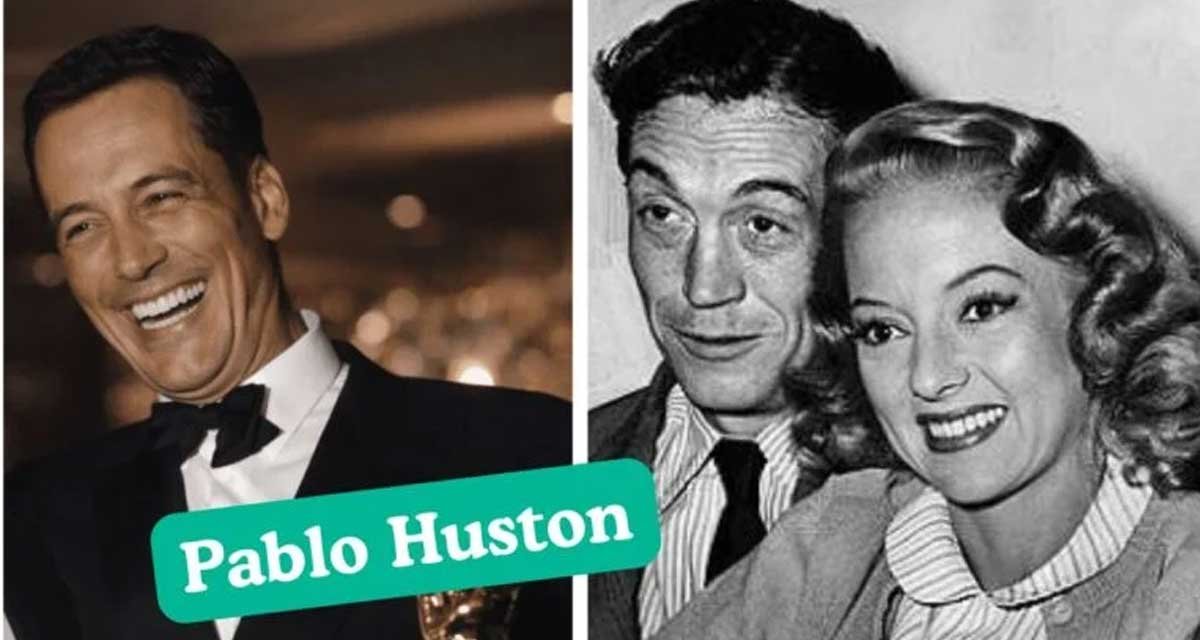
While John Huston was the force that brought Pablo into a new world, Evelyn Keyes was the anchor that helped him navigate it. An accomplished actress in her own right, famous for her role as Suellen O’Hara in “Gone with the Wind,” Keyes possessed a warmth and grace that provided a crucial counterbalance to the often-chaotic Huston household. She was the nurturing presence in Pablo’s new life, a source of stability and affection.
Keyes, who was married to Huston from 1946 to 1950, embraced her role as an adoptive mother with genuine care. She introduced Pablo to the world of art, literature, and culture, enriching his upbringing with a sense of refinement. Her Southern charm and gentle nature created a safe harbor for a young boy adjusting to a new language, a new family, and a new life. Her influence was instrumental in shaping the reserved and thoughtful man he would become.
In her later memoirs, Keyes wrote about her life with Huston, including difficult passages that touched upon her time with Pablo. While these accounts add a layer of complexity to the family’s story, they must be viewed within the context of a personal narrative written decades later. What remains undisputed is her significant and positive impact during Pablo’s formative years. She was the steady hand that guided him through an extraordinary transition, leaving an indelible mark on his character.
The Huston Dynasty: Why Pablo Chose a Different Path
The Huston family is a true Hollywood dynasty, a lineage of talent that spans three generations. It began with the patriarch, Walter Huston, an Oscar-winning actor. His son, John, became one of the most celebrated directors of all time. The creative torch was then passed to John’s children, who each carved out their own space in the entertainment world. This makes Pablo’s story all the more remarkable.
His siblings represent a constellation of talent. Anjelica Huston is an Academy Award-winning actress of immense depth and presence. Tony Huston is a respected screenwriter, and Danny Huston is a versatile actor and director. Even John Huston’s other adopted child, Allegra Huston, has a public profile as a writer and editor. They all, in their own way, continued the family’s public legacy. All except for Pablo.
This is the Huston family paradox. In a family where fame was the birthright, Pablo chose anonymity. His decision to live a private life was a radical act, a quiet defiance of expectation. It raises profound questions about the nature of success and the meaning of legacy. While his siblings found fulfillment in the spotlight, Pablo’s journey suggests that true contentment can also be found in the quiet spaces, far from the roar of the crowd.
The Strength in Silence: Why Pablo Huston Rejected Hollywood
Pablo Huston’s rejection of Hollywood was not a passive retreat; it was an active and deliberate choice. In a world that equates visibility with value, he chose the strength of silence. He has no public career, no social media presence, and has never given an interview. This conscious decision to remain outside the spotlight is perhaps the most fascinating aspect of his story. It speaks to a man who understood the true cost of fame and decided it was a price he was unwilling to pay.
From a psychological perspective, the experience of being adopted into a famous family can be incredibly complex. It often involves navigating issues of identity, belonging, and expectation. Pablo’s choice to live a private life can be seen as a powerful act of self-preservation, a way to forge an identity on his own terms, separate from the towering legacy of the Huston name. It required immense courage to turn his back on a world that so many others desperately try to enter.
His life offers a modern parallel to the growing conversation around the mental health of celebrity children. In an age of relentless public scrutiny, Pablo’s story is a reminder that privacy is a form of power. It is the freedom to be oneself, away from the glare of the camera and the judgment of the public. His life is a testament to the idea that authentic success is not about what you achieve in the eyes of the world, but about the peace you find within yourself.
The Painting That Speaks Volumes: John Huston’s Artistic Legacy
Beyond his cinematic genius, John Huston was also a gifted painter, a lesser-known talent that offers a rare glimpse into his private world. One of the most intimate artifacts of his relationship with Pablo is a portrait he painted of his adopted son. The painting, described by those who have seen it, depicts a young Pablo holding a guitar. It is a quiet, contemplative image, rendered in a stylized manner that captures a moment of serene connection between father and son.
This portrait is more than just a piece of art; it is a historical document. It speaks volumes about the genuine affection Huston felt for Pablo. The act of painting someone is an intimate one, requiring time, observation, and a deep sense of presence. In a life as tumultuous and fast-paced as Huston’s, this quiet act of creation is a powerful testament to the bond they shared. It shows that Pablo was not just a humanitarian gesture, but a cherished member of the family, worthy of his father’s artistic attention.
The painting serves as a poignant reminder that family history is not always written in words. Sometimes, it is captured in a brushstroke, in a quiet moment of shared humanity. This artistic trace provides a deeper understanding of their relationship, a story told not through dialogue or drama, but through the silent language of art. It enriches the Huston legacy, revealing a softer, more personal side of a man known for his rugged exterior.
Maintaining Anonymity When Your Name Is Huston: A Modern Paradox
In the 21st century, achieving true anonymity is a challenge; for someone with a name like Huston, it is a monumental feat. Pablo Huston’s ability to maintain his privacy in the digital age is a modern paradox. With a famous surname, every search engine and social media platform becomes a potential threat to a quiet life. Yet, he has successfully navigated this landscape, leaving behind almost no digital footprint.
This has, at times, led to confusion. Online searches for “Pablo Huston” occasionally lead to contemporary artists or photographers with similar names, blurring his historical identity with the digital profiles of others. This very confusion, however, highlights his success. He has remained so far removed from the digital world that he has become almost un-searchable, a ghost in the machine of modern information.
His privacy is a testament not only to his own determination but also to the discretion of his family. They have respected his choice, shielding him from the public inquiries that inevitably come with their level of fame. In a culture of oversharing, Pablo’s life is a masterclass in restraint. It is a powerful statement about the right to be forgotten, the right to own one’s story by choosing not to tell it.
Where Is Pablo Huston Today? The Current Life of a Private Man
So, where is Pablo Huston now? The truth is, very little is known for certain, and that is entirely by design. Now in his early seventies, he is believed to reside quietly in either the United States or Ireland, a country with deep ties to the Huston family. He has no public profile, no social media accounts, and makes no appearances at the film premieres or award ceremonies that are a regular part of his siblings’ lives.
This continued privacy is the most current and consistent fact of his life. While it may be frustrating for those curious to know more, it is also deserving of respect. He has drawn a clear boundary between his life and the public’s gaze, and that boundary has held for over half a century. His story is a powerful reminder that not all narratives are open to public consumption. Some stories belong only to the people who live them.
In the absence of facts, speculation is pointless. What we do know is that Pablo Huston is a man who has successfully lived life on his own terms, a rare achievement for anyone, let alone someone connected to such a famous family. His current life, as far as the public is concerned, is one of peace and quiet—a testament to a lifelong commitment to privacy.
Beyond Fame: What Pablo Huston’s Story Teaches Us About Success and Identity
Pablo Huston’s legacy is not found in film credits or on a star on the Hollywood Walk of Fame. It is a quieter, more profound legacy—one that challenges our very definition of success. His life teaches us that true success is not measured by public acclaim or material wealth, but by the courage to live an authentic life. He expanded the Huston family legacy, not by adding to its fame, but by adding to its depth, proving that there is honor in a life lived outside the spotlight.
His story also has a significant impact on our understanding of adoption in Hollywood. It is a narrative that moves beyond the fairy tale and delves into the complex realities of identity and belonging. Pablo’s journey reminds us that every adoption story is unique, and that the children of the famous have their own battles to fight, their own identities to forge. His life is a powerful lesson in the importance of self-determination.
In an era of celebrity worship, Pablo Huston’s story is more relevant than ever. It is a quiet but powerful critique of a culture that often values fame above all else. It asks us to consider what we value, what we chase, and what it truly means to live a successful life. The quiet dignity of his path is a source of inspiration, a reminder that the most meaningful journeys are often the ones we take for ourselves, far from the applause of the crowd.
Frequently Asked Questions About Pablo Huston
1. What is Pablo Huston’s full name?
Pablo Huston’s full name is believed to be Pablo Albarran Huston. The name Albarran likely comes from his birth family in Mexico.
2. How did John Huston come to adopt Pablo?
John Huston adopted Pablo in the late 1940s while filming “The Treasure of the Sierra Madre” in Michoacán, Mexico. He was moved by the young boy’s difficult circumstances as an orphan and decided to bring him into his family.
3. Where exactly in Mexico was Pablo Huston found?
Pablo Huston was found in the state of Michoacán, Mexico. This was the location where John Huston was filming his iconic movie.
4. Who is Evelyn Keyes and what was her role in Pablo’s life?
Evelyn Keyes was an American actress, famous for her role in “Gone with the Wind.” As John Huston’s wife at the time of the adoption, she became Pablo’s adoptive mother and provided a crucial source of warmth, stability, and cultural education during his formative years.
5. How many adopted children did John Huston have?
John Huston had two adopted children: Pablo Huston and Allegra Huston. This fact is often overlooked, as most of the focus remains on his biological children.
6. Who is Allegra Huston and how is she related to Pablo?
Allegra Huston is John Huston’s other adopted child, making her Pablo’s adoptive sister. She was adopted later and has a public profile as a writer and editor, offering another contrast to Pablo’s private life.
7. Why did Pablo Huston choose not to pursue a career in entertainment?
While the exact reasons are private, it is understood that Pablo made a conscious and deliberate choice to live outside the spotlight. This decision is seen as an act of self-preservation and a desire to forge an identity separate from his family’s famous name.
8. Are Danny Huston and Anjelica Huston siblings of Pablo?
Yes, Danny Huston and Anjelica Huston are Pablo’s step-siblings. They, along with their brother Tony Huston, are John Huston’s biological children from other relationships.
9. Where does Pablo Huston live now?
Pablo Huston’s exact whereabouts are not publicly known. It is believed that he lives a quiet life in either the United States or Ireland, a country with strong ties to the Huston family.
10. What is known about Pablo Huston’s personal life and relationships?
Almost nothing is known about his personal life, including his marital status or whether he has children. He has successfully kept these details private for his entire life.
11. Why is there so little public information about Pablo Huston?
The lack of information is a direct result of his lifelong commitment to privacy. He has never sought public attention, given interviews, or maintained any form of public profile.
12. What is Pablo Huston’s net worth?
There is no public information regarding Pablo Huston’s net worth. Given his private lifestyle, it is assumed that he lives comfortably but has not pursued the immense wealth often associated with the entertainment industry.
The Quiet Strength of Pablo Huston: A Final Reflection
In the grand, sprawling epic of the Huston family, Pablo Huston’s story is the quiet, contemplative chapter. It is a narrative defined not by what was said, but by what was left unspoken; not by the glare of the spotlight, but by the dignity of the shadows. His life is a fascinating paradox, a study in contrasts that challenges our understanding of what it means to be part of a Hollywood dynasty.
His journey from a Mexican orphanage to the heart of Hollywood is a powerful story of compassion and chance. Yet, it is his journey away from the public eye that is truly remarkable. In choosing privacy, Pablo Huston crafted a legacy of his own, one built on the foundations of authenticity and inner peace. He reminds us that success is not a singular concept, but a deeply personal one, and that the most powerful stories are often the ones lived for an audience of one.
The story of Pablo Huston challenges us to reconsider our assumptions about fame, success, and what it means to live a meaningful life. It is a testament to the power of choice, the strength of conviction, and the quiet dignity that comes from living authentically. As we navigate an increasingly public world, Pablo’s life stands as a beacon, reminding us that there is profound beauty in the spaces we choose to keep private, and that true legacy is measured not by what the world knows about us, but by the peace we find within ourselves.